MOUTONS
Urban villa as intergenerational collective housing
- Location
- Brussels
- Clients
- OCMW - CPAS
- Program
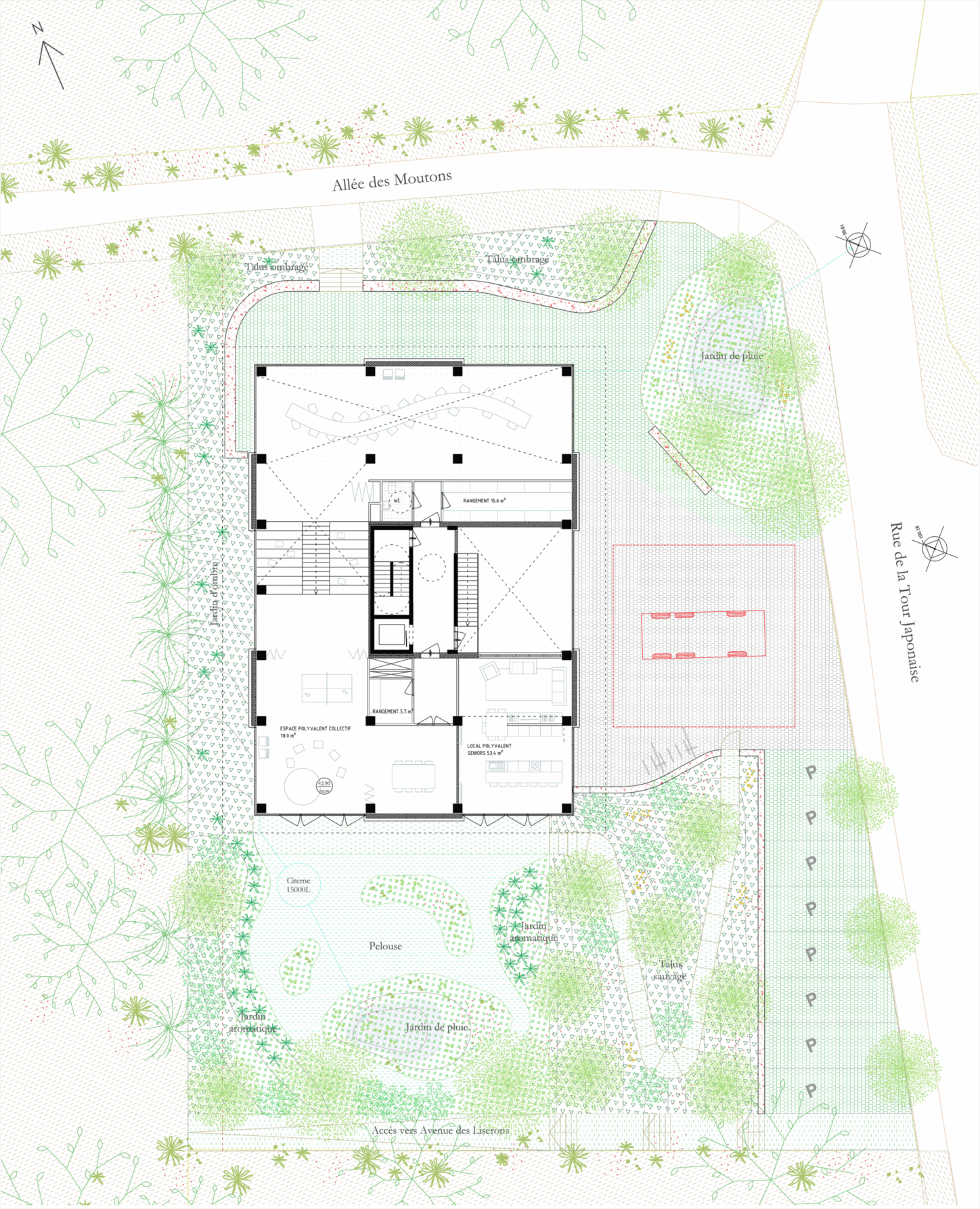
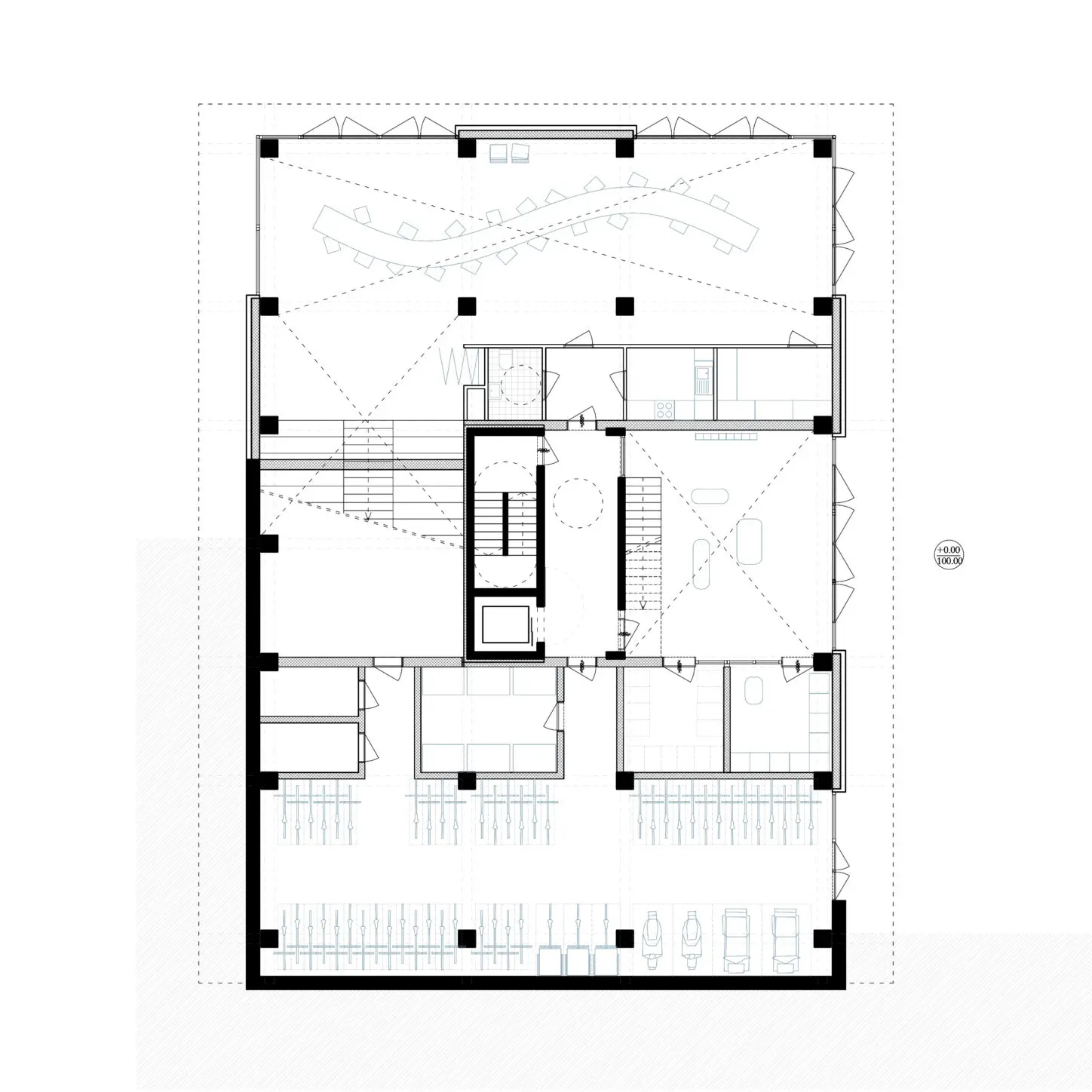
- intergenerational collective housing, communal spaces
- Surface
- 3.300 m2
- Budget
- 6.3M
- Phase
- competition design
- Collaboration
- Latitude
- Year
- 2024
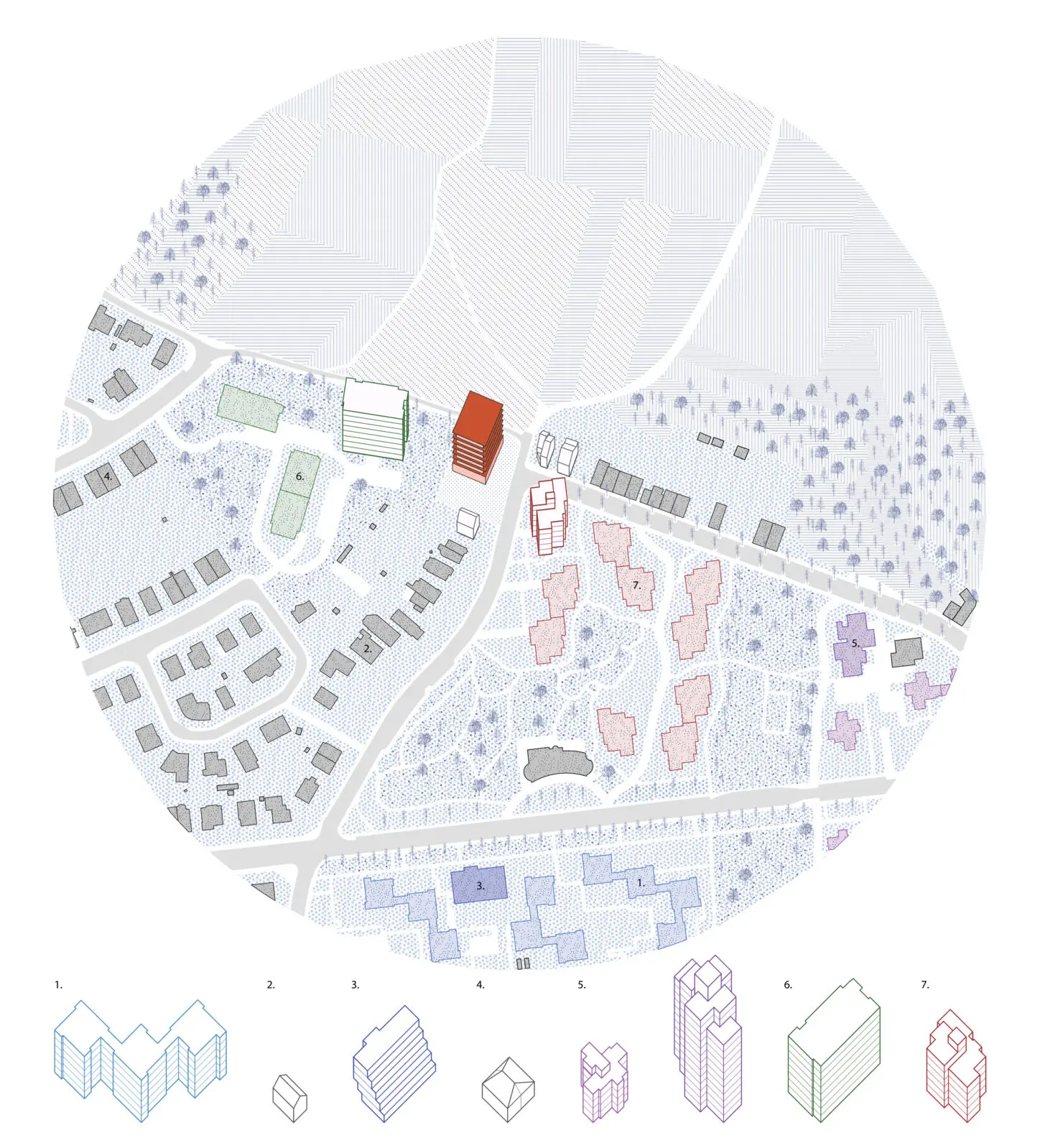
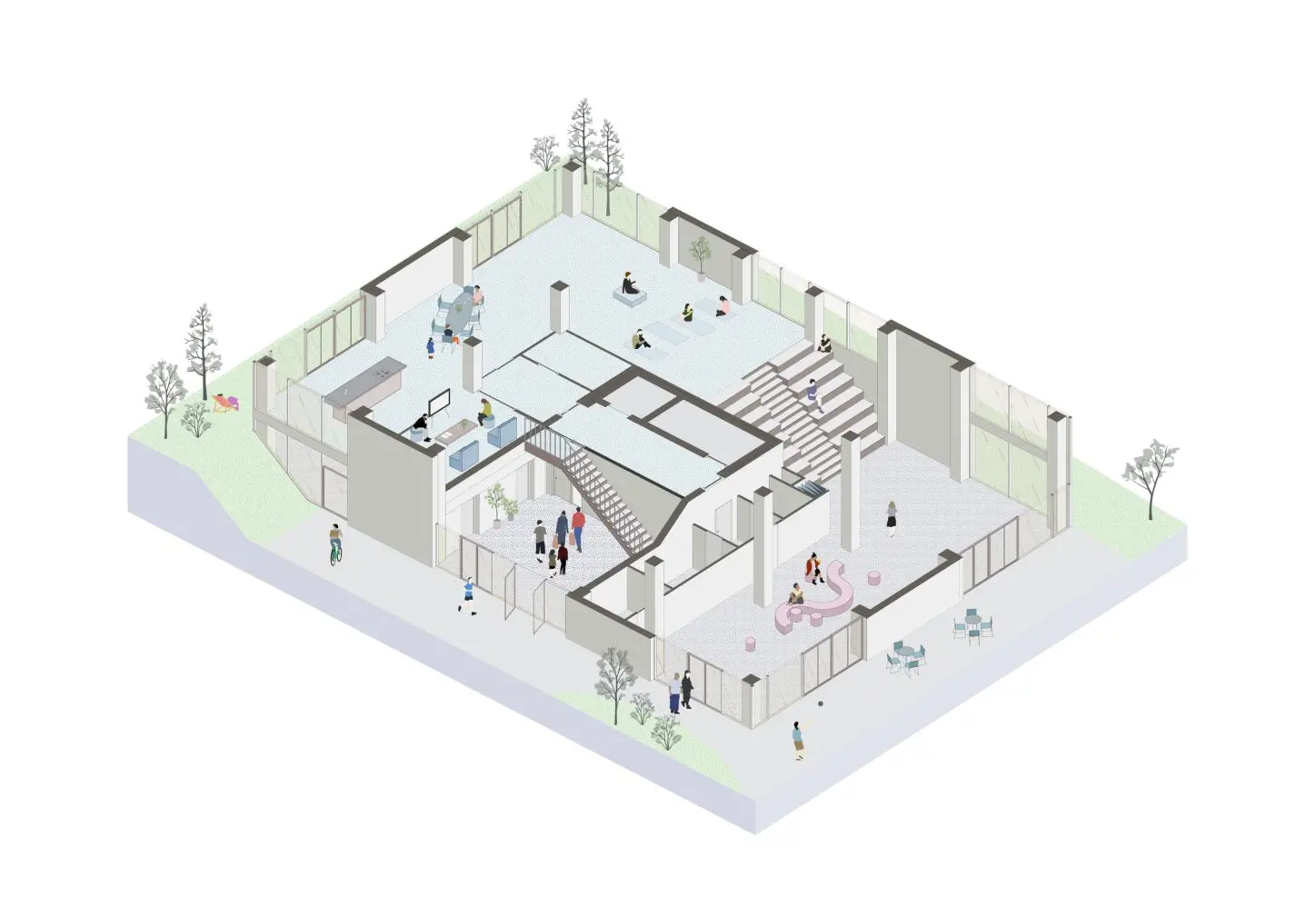
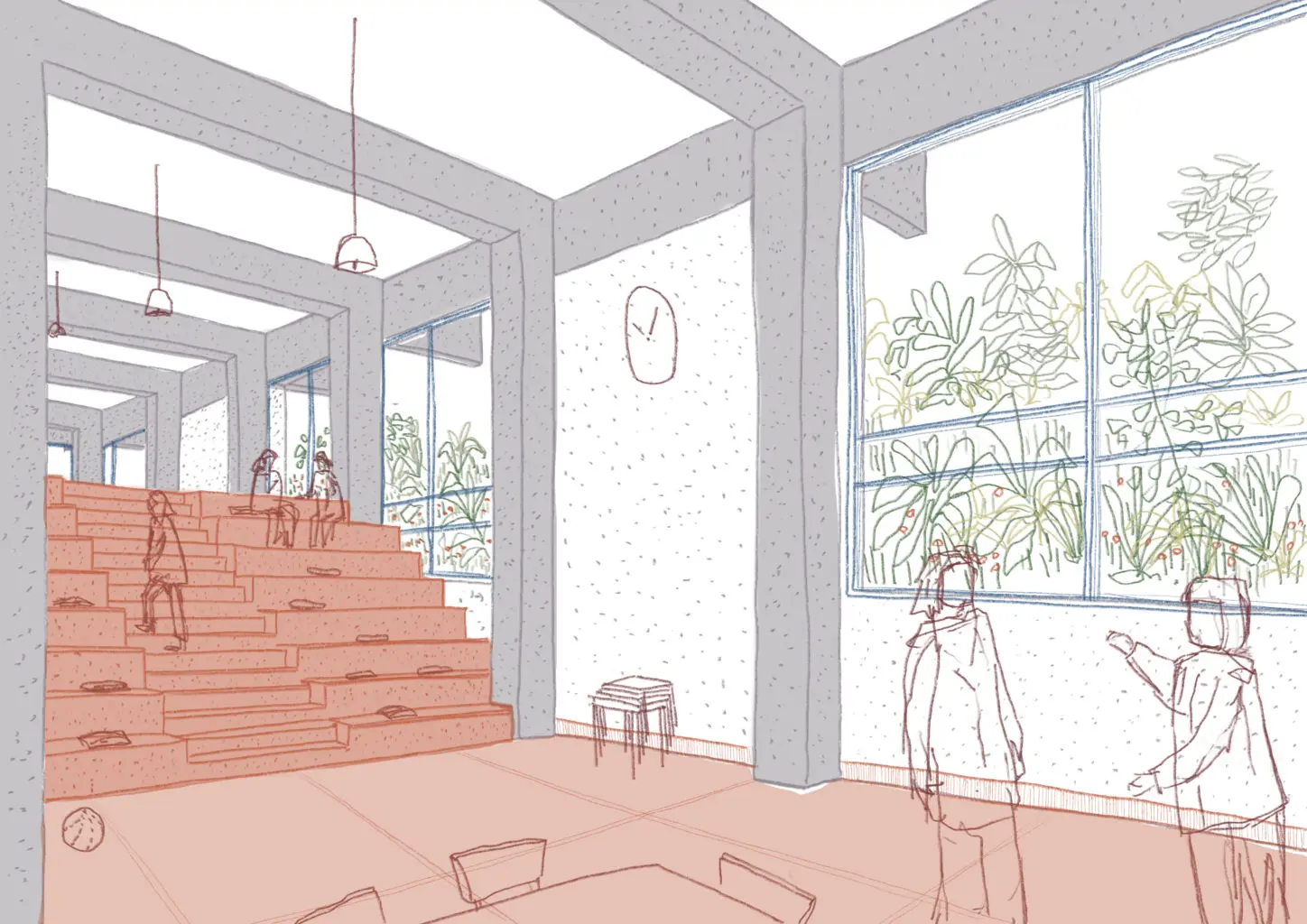
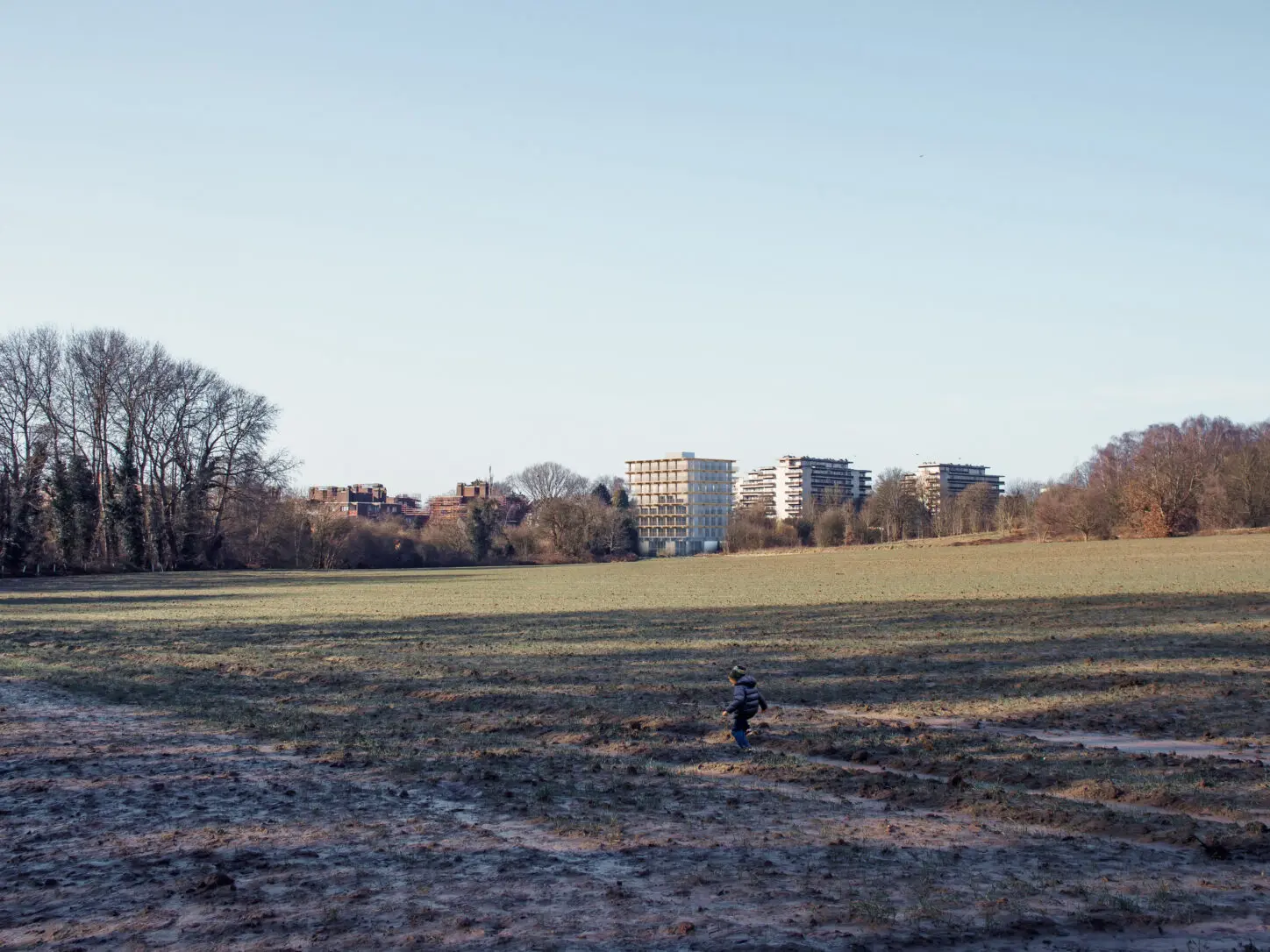
The project Moutons proposes a new development of intergenerational housing, combining shared facilities for residents on the ground floor with multipurpose spaces for the neighbourhood. The site is located in Neder-Over-Heembeek, in a green and residential peri-urban setting on the edge of Brussels, bordering Flanders, and connects to the Versailles neighbourhood. This district, designed in the 1970s by Robert Courtois, aimed to integrate modernist social housing within a park-like environment. It is surrounded by Flemish fields, a few single-family pavilion-style houses, and a private residential complex of 6- to 7-storey buildings, also dating from the same period.
The project aligns with the objectives of the Versailles neighbourhood contract, which is structured around three pillars: housing, landscape, and solidarity. It seeks to enhance quality of life by creating more welcoming and accessible spaces that encourage social and intergenerational mixing. On this vacant plot, a new chapter is introduced in the history of the neighbourhood through a new typology: the urban villa.
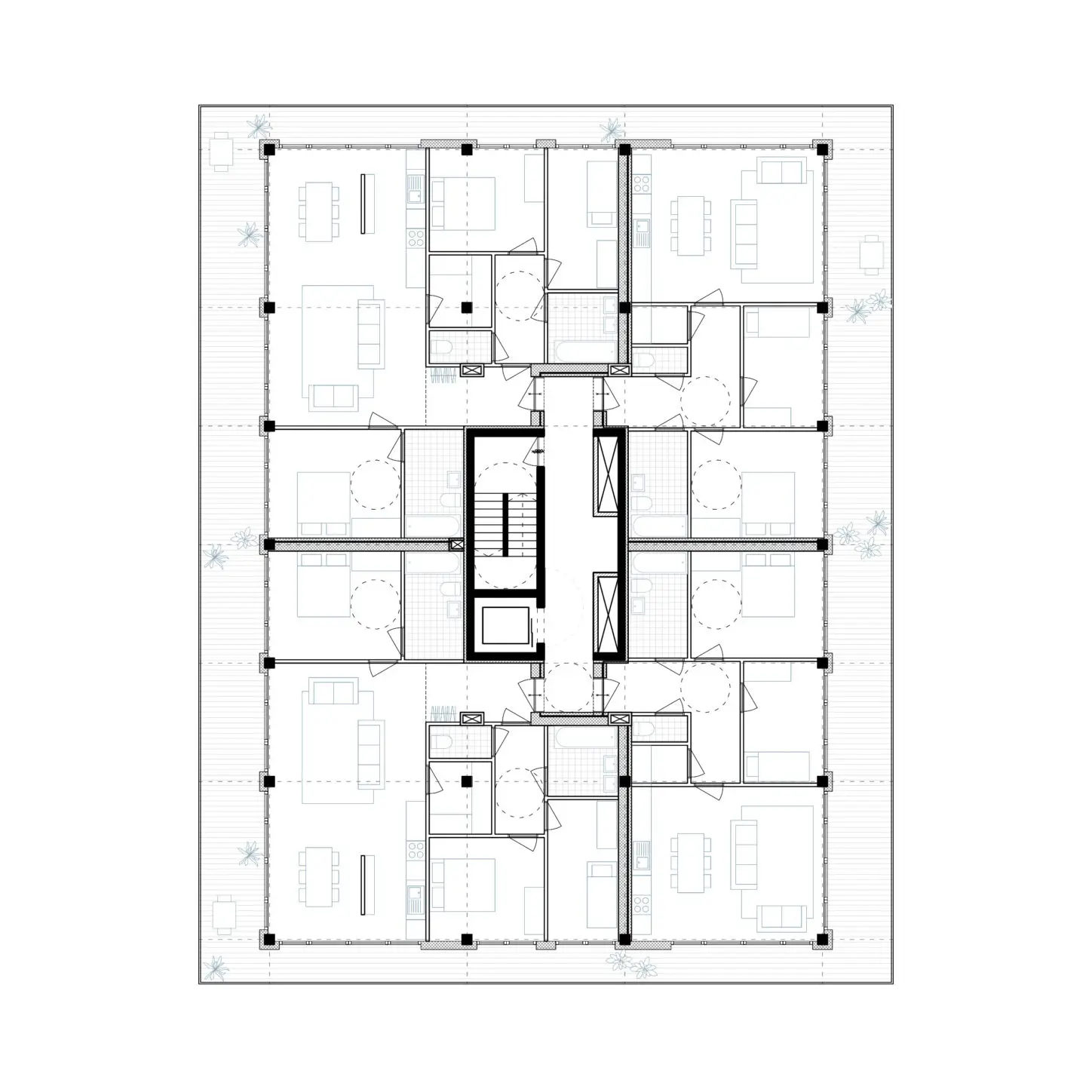
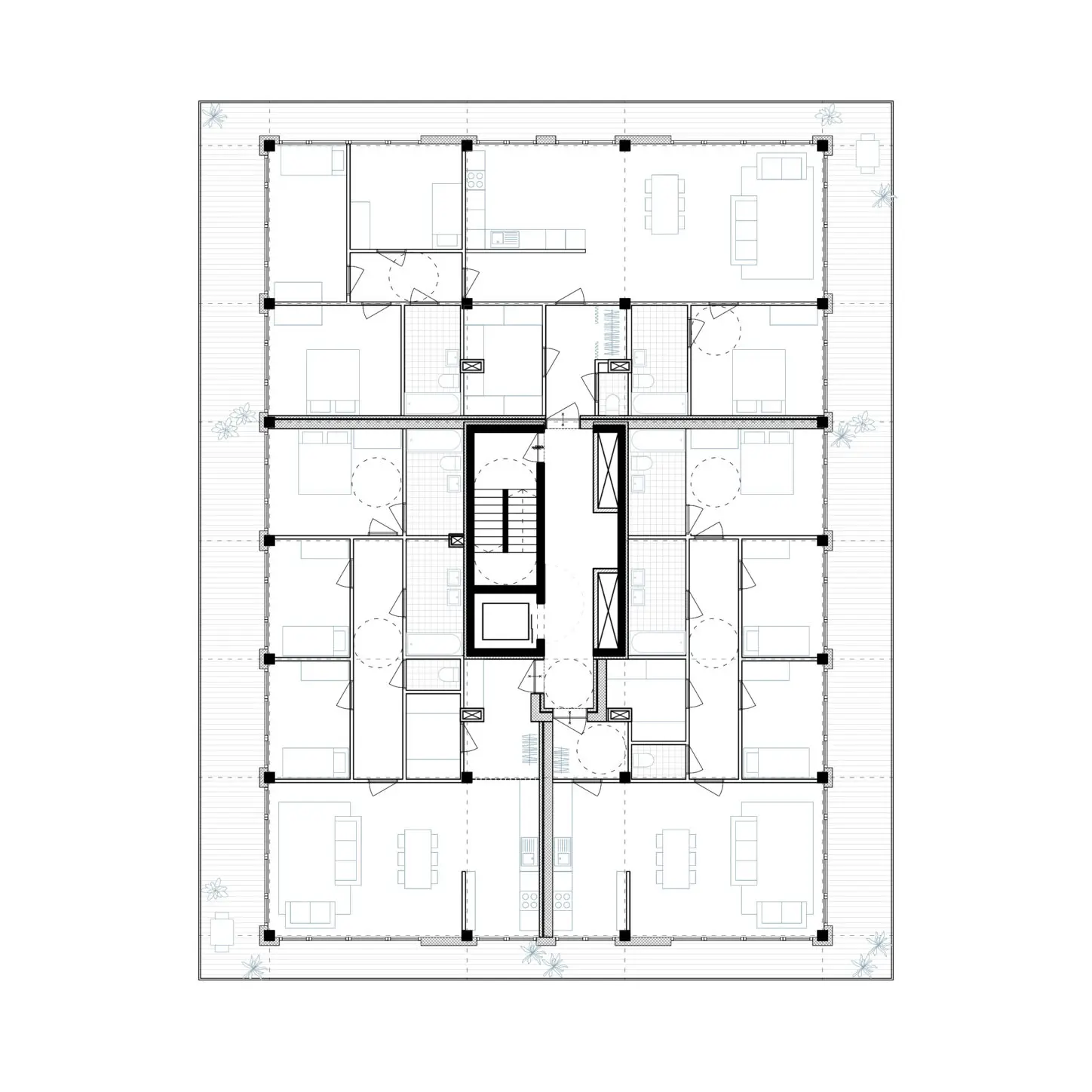
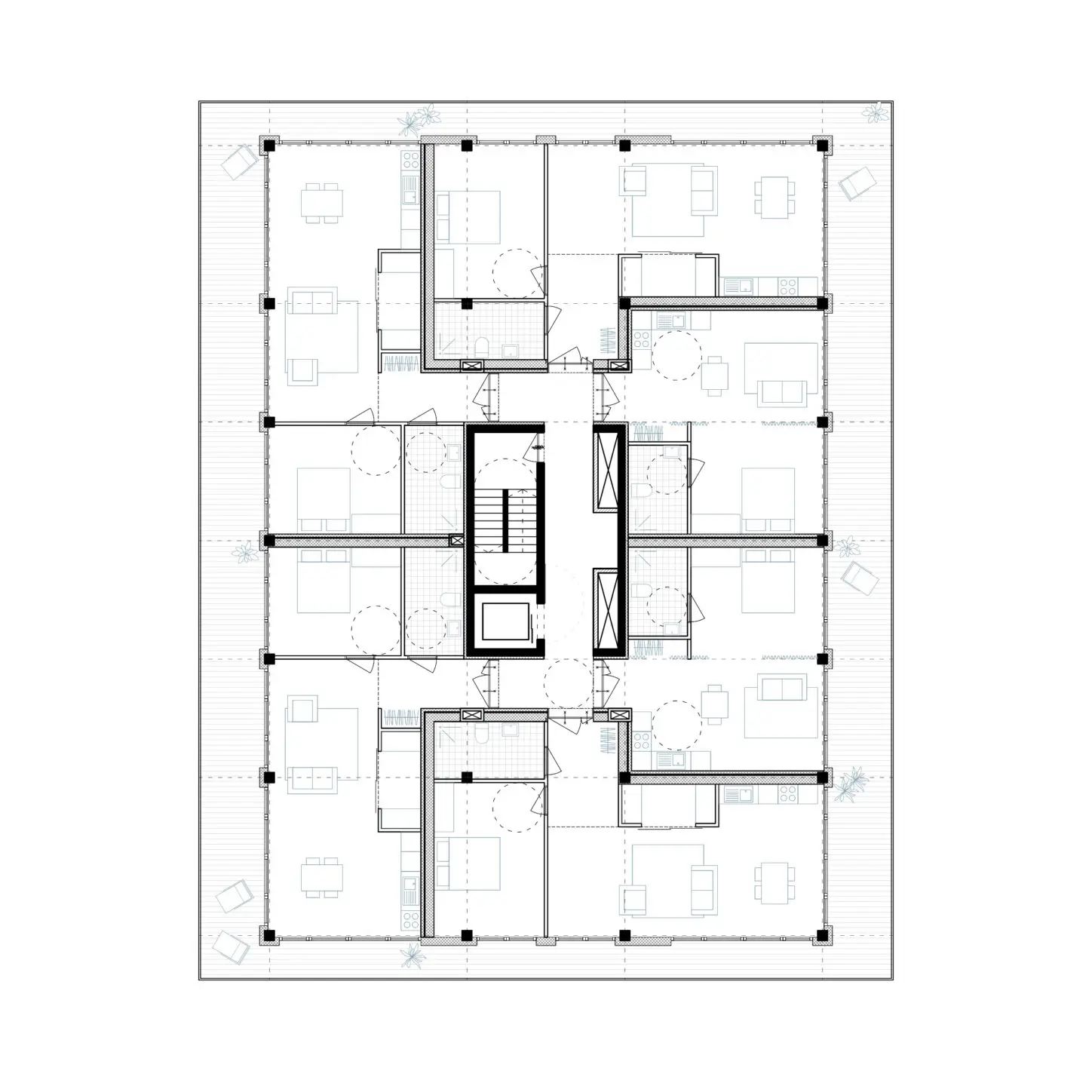
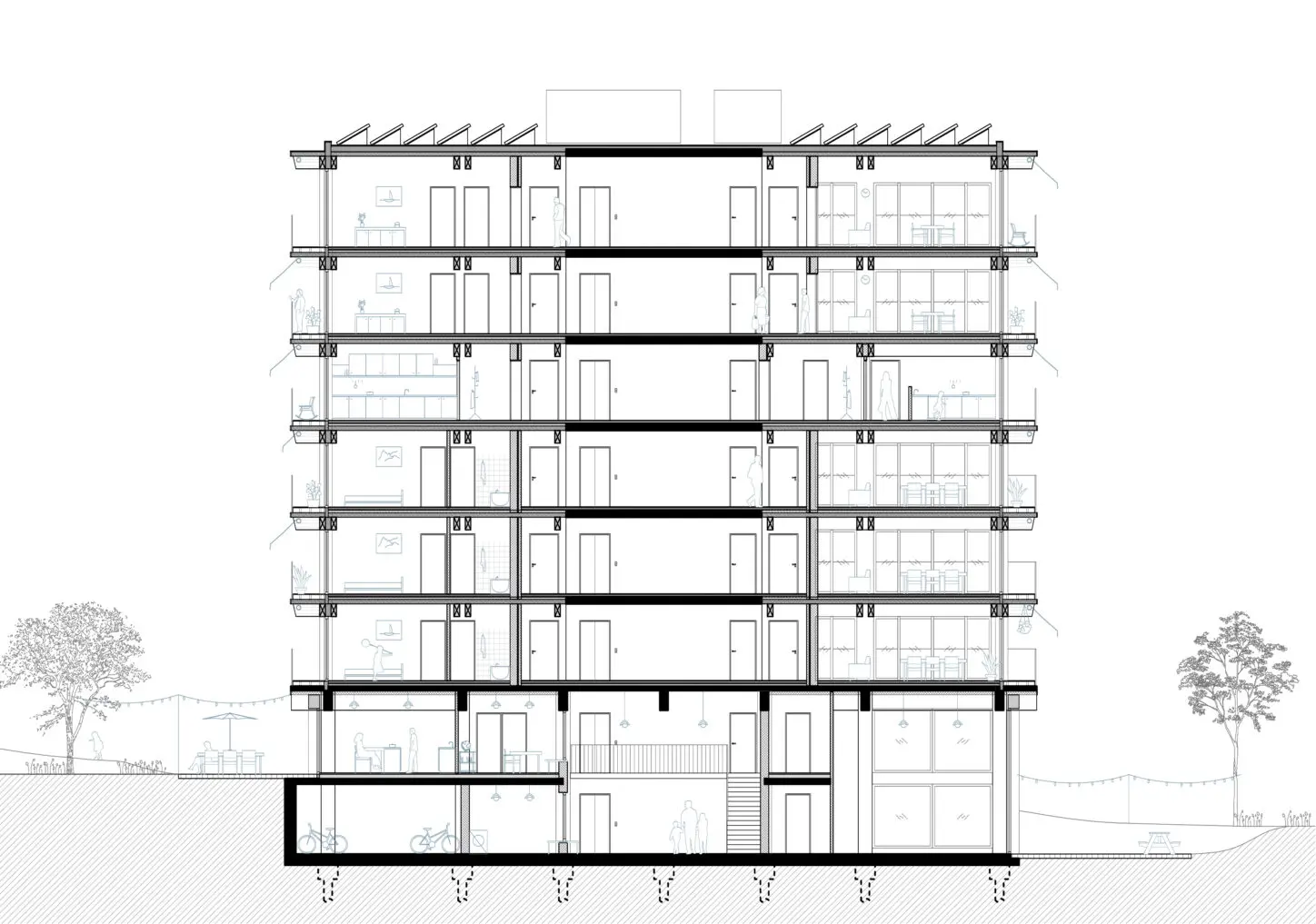
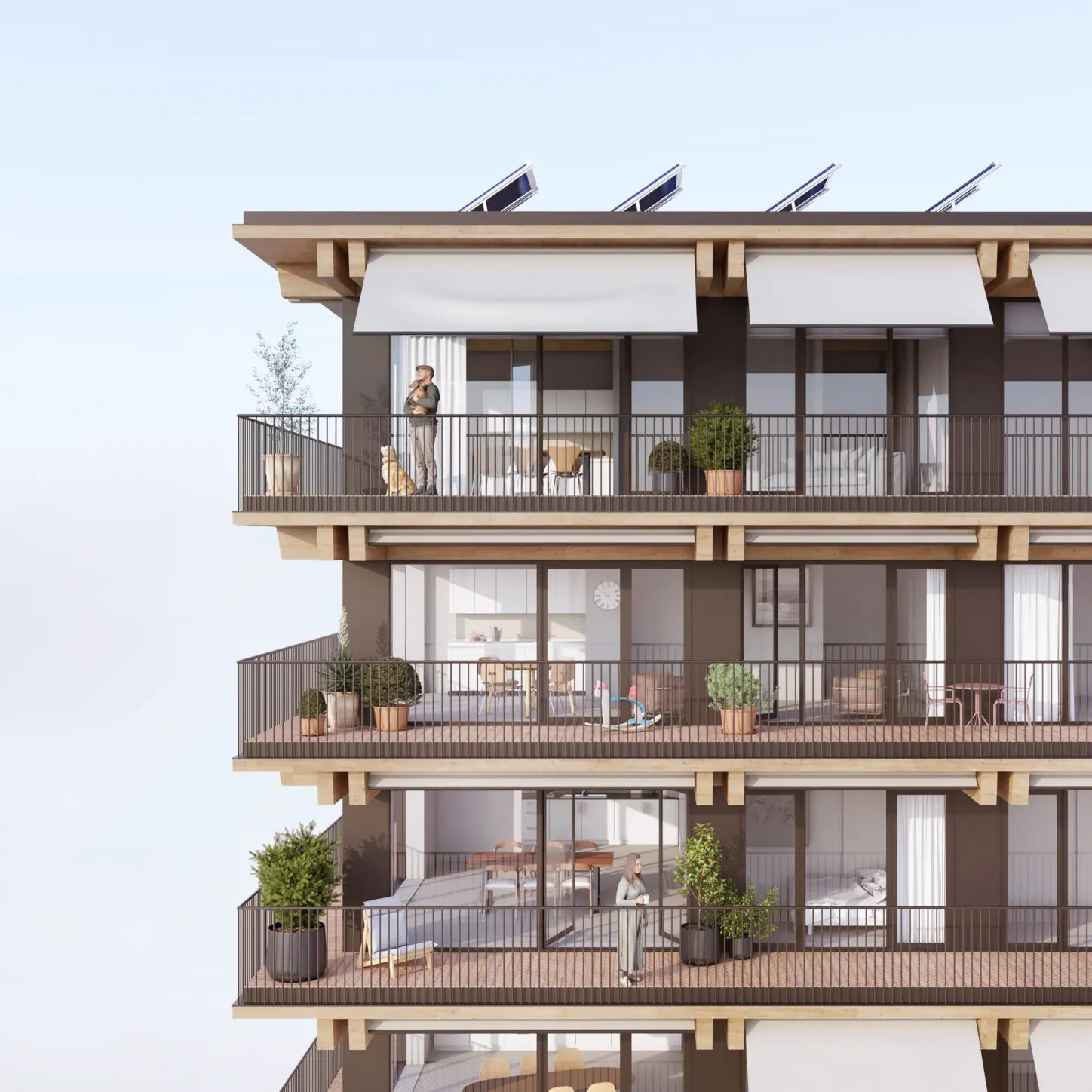
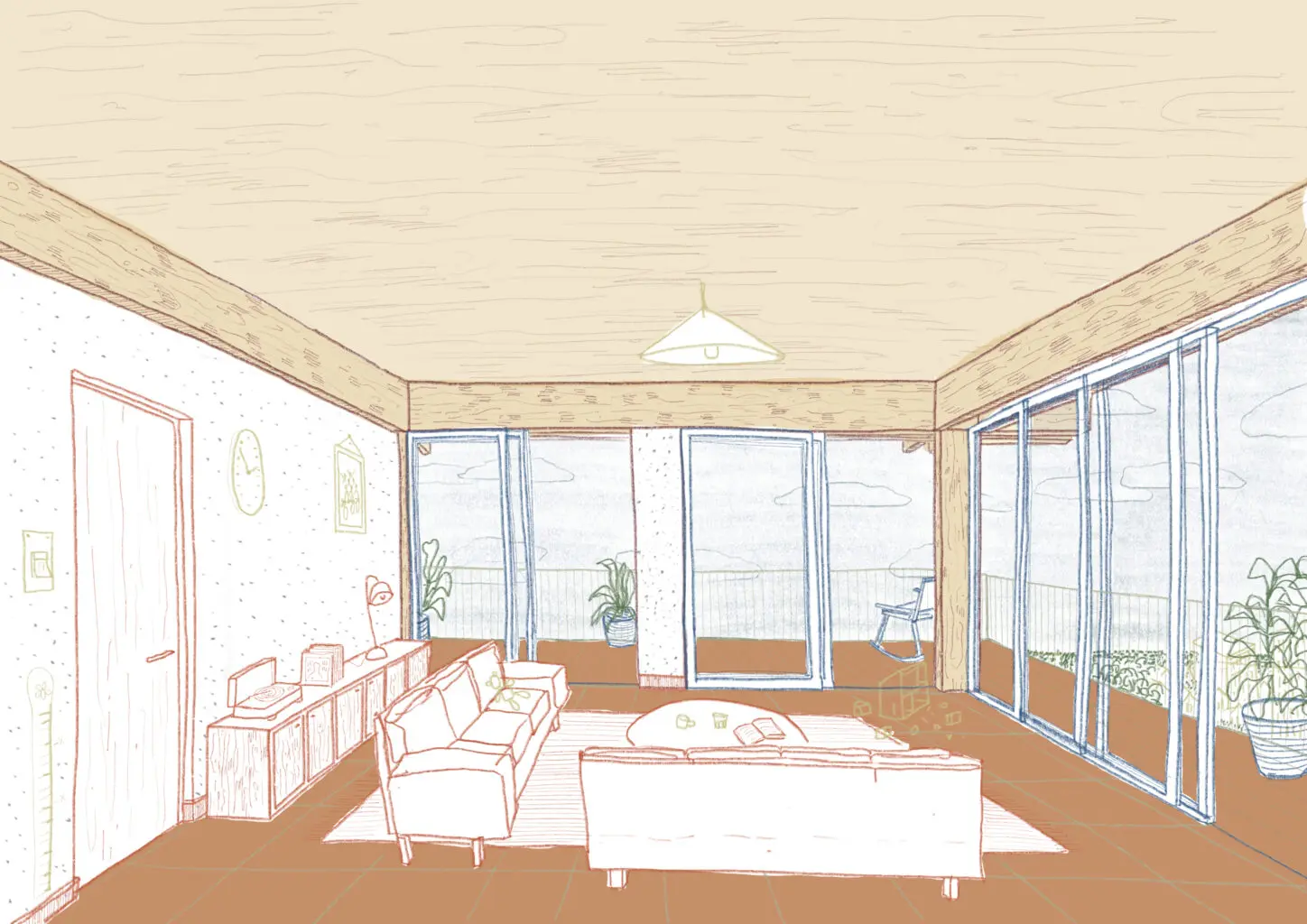
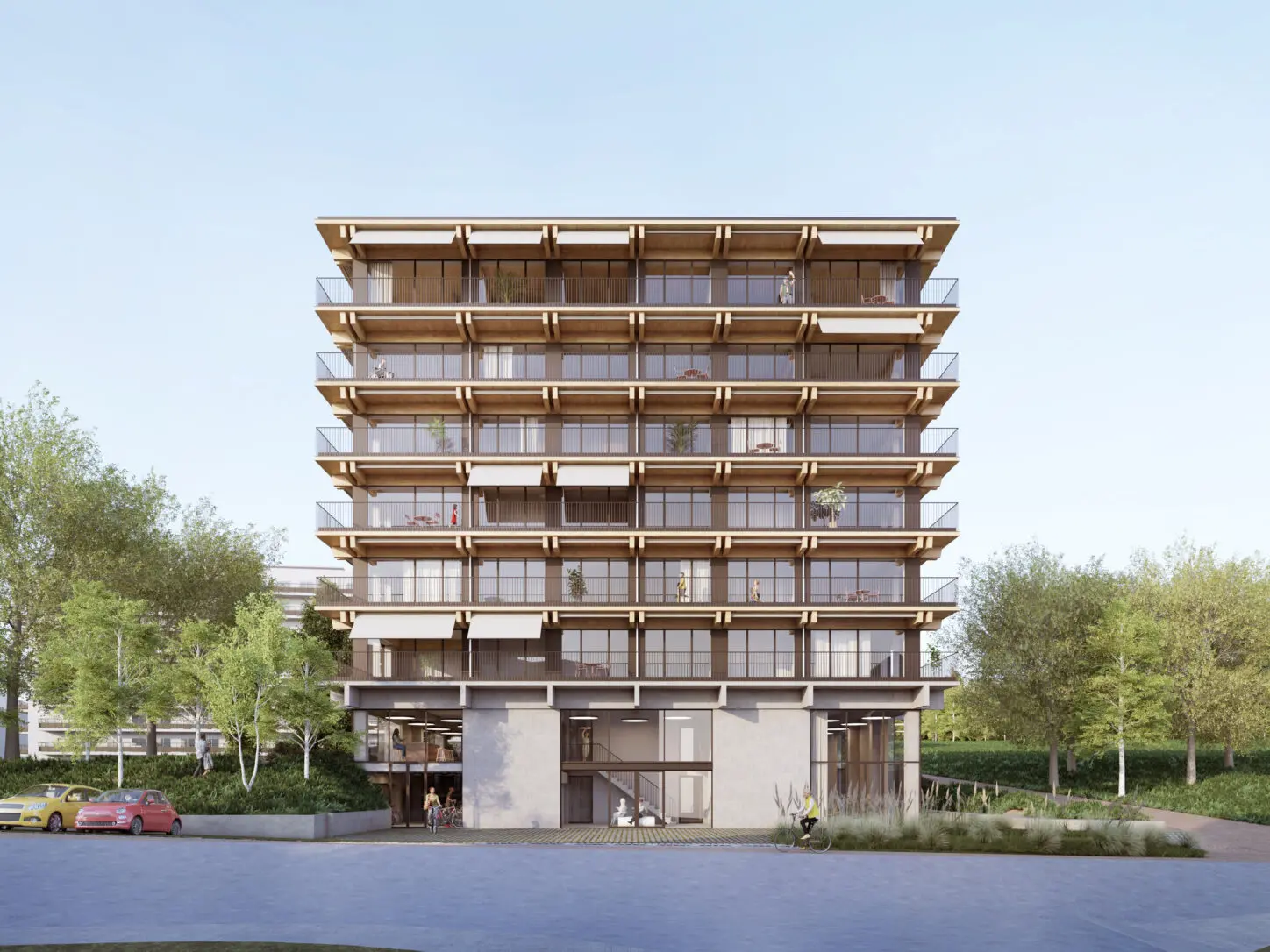
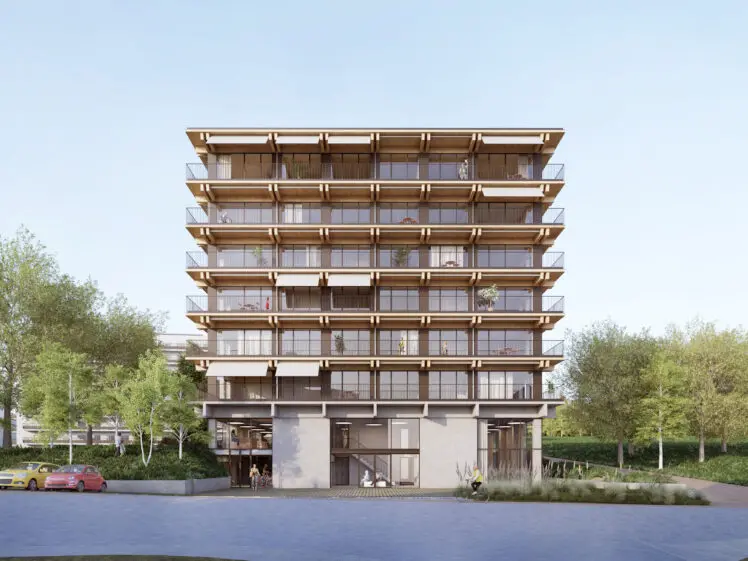
The urban villa consists of a transparent, double-height concrete plinth that ensures accessibility and flexibility. The upper floors are built in timber frame construction and organised around a central circulation core. Terraces extend around the entire perimeter of the building, strengthening the connection between interior and exterior spaces. Housing typologies range from studios to one- to four-bedroom apartments.
The housing units are organised in a stratified manner: family apartments are located on the lower floors, while the quieter upper levels are dedicated to elderly residents. This arrangement creates a balance between a protected living environment and social interaction, while also reinforcing cohesion among older residents.
Fully embedded within greenery, the building has both a public and a collective garden. Paths and the forecourt create a permeable and lively environment, opening the project to its surrounding context.